The Essential Spring Home Maintenance Checklist: 20 Critical Tasks
Spring home maintenance checklist season hit my 1971 Maryland hillside home like a freight train. One week it was cold and manageable. The next week the humidity was pushing through the walls and I was standing in my living room wondering why the house felt like a greenhouse.
Turns out the previous owners had left the fireplace flues wide open all winter. I had a thermal camera showing me exposed brick leaking cold air from three different spots in the house. And I couldn’t even find my air filters because in my house they’re not by the HVAC unit – they’re on the intake vents scattered throughout the rooms.
Nobody warns you about any of this. So here’s the spring home maintenance checklist I wish I’d had.
Why Spring Maintenance Home Checklist Matters
Winter is hard on a house. Freeze and thaw cycles stress your foundation, gutters, and roof. Humidity arrives fast in mid-Atlantic states and if your house isn’t ready it gets inside the walls, the wood, and the air. Catching problems in spring before summer heat arrives saves money and headaches.
Spring Home Maintenance Checklist
Check and Close Your Fireplace Flues
If you have a fireplace check that the flue was closed after last use. Open flues let conditioned air straight out and outside air straight in. My previous owners left mine open all winter. A simple fix that costs nothing but costs you plenty if you miss it.
1. Check Your Air Filters
In most homes air filters are located at the HVAC unit. In older homes like mine they can be on the intake vents throughout the house. Find every single one. Replace any filter that’s grey or clogged. A dirty filter makes your HVAC work harder and drives up your energy bill.
2. Check Humidity Levels
Spring humidity in Maryland can climb fast. Invest in a smart thermostat with humidity monitoring – it changed how I understood my home completely. Target indoor humidity between 30-50%. Above that and you’re inviting mold, wood damage, and general misery.
3. Inspect Exposed Brick and Masonry
This one surprised me. I bought a thermal camera to find air leaks and discovered that every exposed brick surface in my house – fireplace surrounds, the wall under my stairs, my laundry room – was acting like a sieve. Brick is porous. Older brick is more porous. Check yours with a thermal camera or simply run your hand along brick walls on a cold day and feel for drafts. Sealing it is a weekend project that pays back immediately.
4. Clean Your Gutters
Winter leaves debris, twigs, and buildup in gutters. Clean them out before spring rains arrive. Clogged gutters push water back toward your roofline and foundation.
5. Inspect Your Roof
Walk the perimeter and look up. Missing shingles, lifted edges, or dark patches are all warning signs. Catching a small roof issue in spring costs a fraction of what water damage costs later.
6. Check Window and Door Seals
Winter temperature swings crack and shrink caulk and weatherstripping. Run your hand around every window and exterior door frame. Feel for drafts. Replace any weatherstripping that looks compressed or cracked.
7. Flush Your Water Heater
Sediment builds up in water heaters over winter. A quick flush extends the life of the unit and keeps it running efficiently. Takes about 30 minutes and saves you from a surprise replacement.
8. Service Your HVAC
Before you need AC get your HVAC serviced. Change filters, clean the outdoor unit, and make sure it’s running efficiently. If you have a 50 year old house like mine and you’re not sure where your damper is – find it now before summer. Call the previous owner if you have to. They probably won’t know either, but it’s worth a try.
9. Check Your Sump Pump
Spring rain is sump pump season. Test yours by pouring water into the pit and making sure it activates. A failed sump pump in a heavy rain is a basement disaster.
10. Inspect Your Foundation
Walk the exterior perimeter and look for new cracks in the foundation. Small hairline cracks are often normal. Wide cracks, horizontal cracks, or cracks with water stains need attention.
11. Test Smoke and Carbon Monoxide Detectors
Replace batteries. Test every unit. Non-negotiable.
12. Check Exterior Faucets and Hoses
Make sure outdoor faucets weren’t damaged by freezing temps. Reconnect hoses and check for drips or cracks.
13. Inspect Your Deck or Patio
Look for loose boards, popped nails, and wood rot. Spring is the best time to seal or stain a deck before summer sun beats it up.
14. Clean Dryer Vents
Lint buildup in dryer vents is a fire hazard. Clean yours out every spring. It also makes your dryer run more efficiently.
15. Check Trees and Landscaping
Winter can leave dead branches hanging over your roof, fence, or your neighbor’s yard. Ask me how I know. A dead tree removal is expensive. A dead tree falling on something is more expensive. Walk your property and look up.
16. Inspect Attic and Crawl Spaces
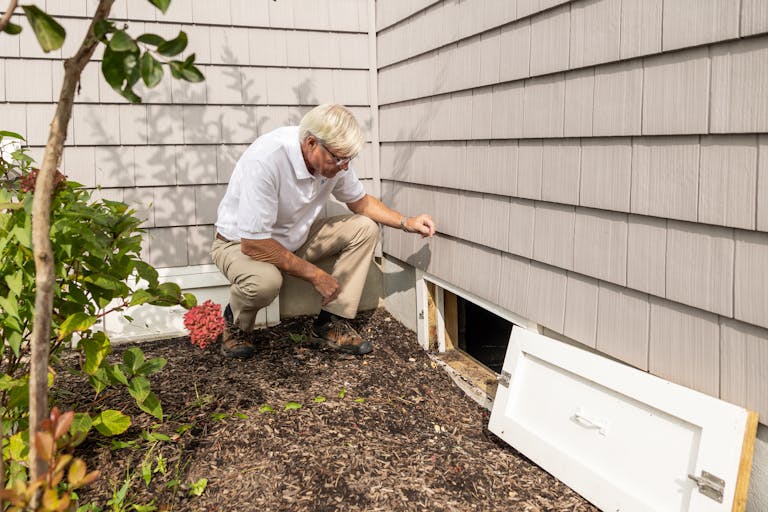
Look for signs of moisture, pests, or damaged insulation. Winter creates conditions for both mold and critters to move in.
17. Check Your Electrical Panel
Look for tripped breakers or signs of heat damage. If anything looks burnt or smells off call an electrician.
18. Clean Window Screens
Remove, clean, and reinstall window screens. Check for tears or bent frames.
19. Make a Repair List
Walk through every room and write down anything that needs attention. Prioritize by urgency and cost. This list becomes your summer project plan.
20. The Easiest Way to Stay on Top of It All
A seasonal checklist is a great start but home maintenance happens year round. At Home Checkup Guide I break it down week by week so nothing piles up and nothing gets missed. A 1971 house with 50 years of history taught me that staying ahead of maintenance is always cheaper than catching up to it.
Subscribe free below and get your weekly home maintenance checklist delivered to your inbox every week.
https://shorturl.fm/mwutb
https://shorturl.fm/InidS
https://shorturl.fm/A6Tic
https://shorturl.fm/KkVYc
https://shorturl.fm/WYhgt
https://shorturl.fm/YUt7b
https://shorturl.fm/qN2lp
https://shorturl.fm/dSKQ6
https://shorturl.fm/2XoY0
https://shorturl.fm/CuyAI
https://shorturl.fm/Bek0f
https://shorturl.fm/Ns6Jx
https://shorturl.fm/u9OFH
https://pesnimp3.net/1.html
https://pesnimp3.net/1.html
https://shorturl.fm/QRSEO
https://shorturl.fm/sOfq5
https://shorturl.fm/DVjF3
https://shorturl.fm/IY9Yk
https://shorturl.fm/M7DD6
https://shorturl.fm/CDGeD
https://shorturl.fm/kqTm2
https://shorturl.fm/9Uhwp
https://shorturl.fm/A1JUU
https://shorturl.fm/lwNIQ
https://shorturl.fm/DDuij
https://shorturl.fm/v6JKA
https://shorturl.fm/WH99h
https://shorturl.fm/o825L
https://shorturl.fm/IcIKx
https://shorturl.fm/pkJNA
https://shorturl.fm/7PGsU
https://shorturl.fm/0BGWp
https://shorturl.fm/6qq9x
https://shorturl.fm/OwuJQ
https://shorturl.fm/e2pFa
https://shorturl.fm/R5FcK
https://shorturl.fm/dSlMx
https://shorturl.fm/byow2
https://shorturl.fm/vVWoj
https://shorturl.fm/kykHu
Последние новинки музыки 2026 скачать бесплатно https://shorturl.fm/l9SWZ
https://shorturl.fm/sILlg
https://shorturl.fm/y7feW
https://shorturl.fm/99num
https://shorturl.fm/FF8Rc
https://shorturl.fm/dylOh
https://shorturl.fm/CzolZ
https://shorturl.fm/2OjbN
Новинки музыки 2026 скачать бесплатно https://shorturl.fm/7J6vJ
https://shorturl.fm/GYYKm
https://shorturl.fm/2XBDS
Новинки музыки 2026 скачать бесплатно https://shorturl.fm/pj0rJ
https://shorturl.fm/WSfT6
Последние новинки музыки 2026 скачать бесплатно – https://shorturl.fm/rrdv9
Последние новинки музыки 2026 скачать бесплатно – https://shorturl.fm/rrdv9
https://shorturl.fm/miFIa
https://shorturl.fm/9Is8O
https://shorturl.fm/tDh7T
https://shorturl.fm/uhk96
https://is.gd/2esl83
https://is.gd/2esl83
https://shorturl.fm/JX8RZ
https://shorturl.fm/2noag
https://shorturl.fm/cCFp2
https://shorturl.fm/WqAUA
https://shorturl.fm/YVeQc
https://shorturl.fm/2c7NP
https://shorturl.fm/lfi2q
https://shorturl.fm/IFIyR
https://shorturl.fm/PP80R
https://shorturl.fm/EEPjD
https://shorturl.fm/EIGJU
https://shorturl.fm/oiCA0
https://shorturl.fm/KirMt
https://shorturl.fm/EHKRk
https://shorturl.fm/hDPgp
https://shorturl.fm/ohzm6
https://shorturl.fm/YP9X0
https://shorturl.fm/1wEDk
https://shorturl.fm/4so3Z
https://shorturl.fm/uTSpS
https://shorturl.fm/EG37g
https://shorturl.fm/HzdOH
https://shorturl.fm/jRg6e
https://shorturl.fm/YFsMn
https://shorturl.fm/Mdxa6
https://shorturl.fm/QlTM1
https://shorturl.fm/FiOId
https://shorturl.fm/z6mbQ
https://shorturl.fm/4840v
https://shorturl.fm/wmHMX
https://shorturl.fm/B86oU
https://shorturl.fm/aNWdi
https://shorturl.fm/sfzmm
https://shorturl.fm/S5KoA
https://shorturl.fm/qvfAl
https://shorturl.fm/QgAtf
https://shorturl.fm/2JCcV
https://shorturl.fm/S4wts
https://shorturl.fm/ttBs8
https://shorturl.fm/IeuGE
https://shorturl.fm/KOEoU
https://shorturl.fm/YdwZo
https://shorturl.fm/GttPM
https://shorturl.fm/NY3kf
https://shorturl.fm/ZFqrn
https://shorturl.fm/xr2DF
https://shorturl.fm/IeMOa
https://shorturl.fm/u2ZiK
https://shorturl.fm/PfRHi
https://shorturl.fm/wTQDx
https://shorturl.fm/MejJY
https://shorturl.fm/Ry3be
https://shorturl.fm/NOPSI
https://shorturl.fm/gNGWQ
https://shorturl.fm/cz9H3
https://shorturl.fm/m73JM
https://shorturl.fm/yiGpO
https://shorturl.fm/njoZ9
https://shorturl.fm/lU5wF
https://shorturl.fm/TU4V1
https://shorturl.fm/Quo6s
https://shorturl.fm/u2JTb
https://shorturl.fm/jU9NS
https://shorturl.fm/LM8DO
https://shorturl.fm/YIQ9V
https://shorturl.fm/VX7h0
https://shorturl.fm/qkz6b
https://shorturl.fm/qKNmA
https://shorturl.fm/U3nKx
https://shorturl.fm/E3j9r
https://shorturl.fm/P6JwI
https://shorturl.fm/XLdI4
https://shorturl.fm/6Wnco
https://shorturl.fm/FHwt5
https://shorturl.fm/ewepz
https://shorturl.fm/vGfvA
https://shorturl.fm/dYVhx
https://shorturl.fm/KYx9p
https://shorturl.fm/i3TBS
https://shorturl.fm/YcTEO
https://shorturl.fm/e9865
https://shorturl.fm/W22iT
https://shorturl.fm/Dln0V
https://shorturl.fm/EquH8
https://shorturl.fm/F5XzP
https://shorturl.fm/ToaiV
https://shorturl.fm/j20cw
https://shorturl.fm/ZVTRq
https://shorturl.fm/l7YbI
https://shorturl.fm/AyKwc
https://shorturl.fm/dIXLs
https://shorturl.fm/ClSVU
https://shorturl.fm/IvLMR
https://shorturl.fm/kewg5
https://shorturl.fm/xDUom
https://shorturl.fm/v9C44
https://shorturl.fm/MZvwe
https://shorturl.fm/iRR4X
https://shorturl.fm/FiYj2
https://shorturl.fm/BnWec
https://shorturl.fm/MYu2i
https://shorturl.fm/gOAj1
https://shorturl.fm/d6mmE
https://shorturl.fm/EVt2K
https://shorturl.fm/D3syu
https://shorturl.fm/UwKxa
https://shorturl.fm/EF0Tw
https://shorturl.fm/CWMuJ
https://shorturl.fm/cFJKN
https://shorturl.fm/2f9lg
https://shorturl.fm/6K2ud
https://shorturl.fm/BJzrc
https://shorturl.fm/4v66a
https://shorturl.fm/UuxzY
https://shorturl.fm/A0CbG
https://shorturl.fm/JNM5V
https://shorturl.fm/rqgkz
https://shorturl.fm/ckeiM
https://shorturl.fm/EOTBa
https://shorturl.fm/9LVdB
https://shorturl.fm/A7piT
https://shorturl.fm/3K4jB
https://shorturl.fm/xMSnl
https://shorturl.fm/aXYU0
https://shorturl.fm/VpsDY
https://shorturl.fm/aL7ld
https://shorturl.fm/ZzMpZ
https://shorturl.fm/Xzl9Z
https://shorturl.fm/X2oU9
https://shorturl.fm/o8WyF
https://shorturl.fm/rSU97
https://shorturl.fm/LYGG9
https://shorturl.fm/OGOIp
https://shorturl.fm/CyOAm
https://shorturl.fm/sCvgj
https://shorturl.fm/RK7Fo
https://shorturl.fm/Bh2sd
https://shorturl.fm/QtSqB
https://shorturl.fm/HHqJl
https://shorturl.fm/VyRoE
https://shorturl.fm/ZnmVq
https://shorturl.fm/cPvzC
https://shorturl.fm/AkNNc
https://shorturl.fm/qxXVX
https://shorturl.fm/5iNf7
https://addlinks.pro/PT3U0